Rockpile Solutions Provides Real-Time Earthworks Insights Using CesiumJS
Managing large earthworks projects means directing a huge amount of resources, including an expensive fleet of heavy earthmoving equipment where every minute counts. Rockpile Solutions uses CesiumJS to give project managers a constant view of the operations of their sites so they can make decisions in real time that increase productivity and reduce their cost per cubic yard.
Rockpile Solutions’ RPS Tracker provides a detailed perspective of all equipment on site, showing task assignments and performance to instantly reveal bottlenecks. Uniquely, their software integrates with whatever trucks are on a site—new, old, and even rentals. Rather than relying on drivers to mark off hauls and provide an end-of-day load count, Rockpile’s sensors precisely track every load and dump, eliminating manual reporting.
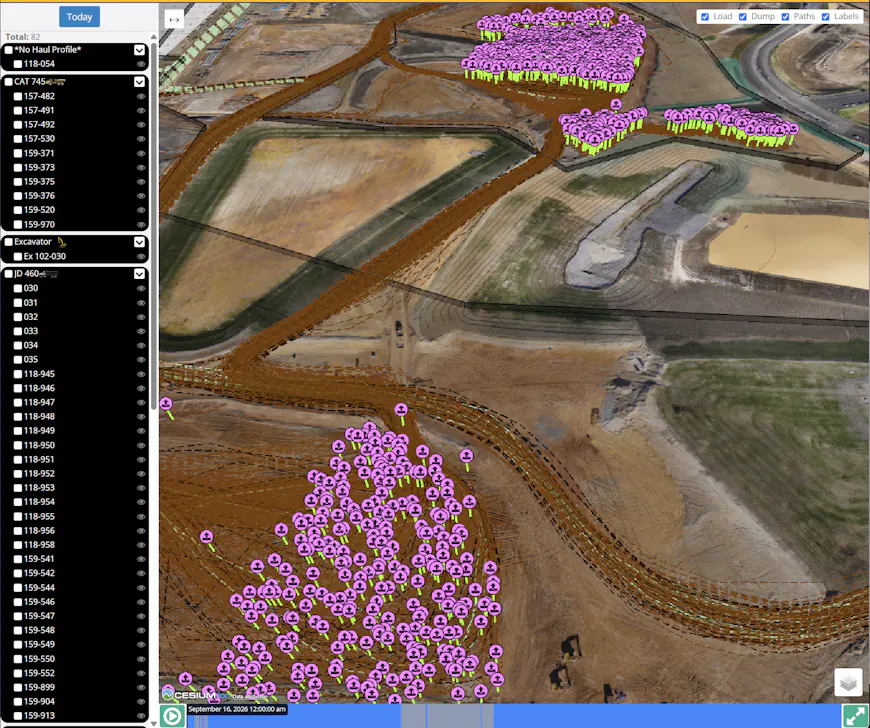
Rockpile provides detailed real-time reports through a geospatial view that helps managers understand progress on site. Courtesy Rockpile Solutions.
“If I'm doing reports tomorrow, I've missed the chance to improve my numbers. I need insights into inefficiencies happening right now in time to correct or fix issues, and Cesium transforms our operational data into a real-time process view. That gives our customers the Earth-Moving Intelligence to make changes now to improve productivity.”
– Bill Quintrell, CTO, Rockpile Solutions
RPS Tracker uses CesiumJS to provide a realistic view of the site in action. Site managers fuse their own drone scans, which provide a current view of the site, with Bing Maps imagery for geospatial context.
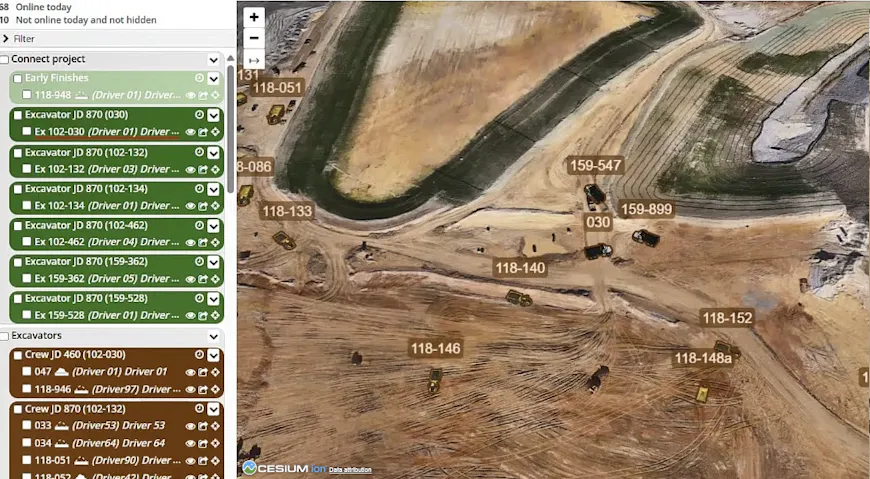
Managers can see the real-time location and status of all vehicles on site so they can reallocate resources for greater efficiency. Courtesy Rockpile Solutions.
The ability to show an entire earthworks site in high precision, with real-time updates from the field, allows site managers to focus on the network as a whole and how each piece fits together. This comprehensive, real-time perspective makes it easier to spot where the fleet is at optimum performance and where the system may be lagging. If, for example, dump trucks are bunching up near an excavator that has hit harder material, waiting to be loaded, they can be reassigned to another excavator that's working more quickly. All tasks are sorted with the poorest performers on top so supervisors know where to apply their limited time to obtain the greatest results. When managers are able to effectively manage the site’s entire earthmoving fleet in real time, the talents of skilled operators can be used to maximum efficiency.
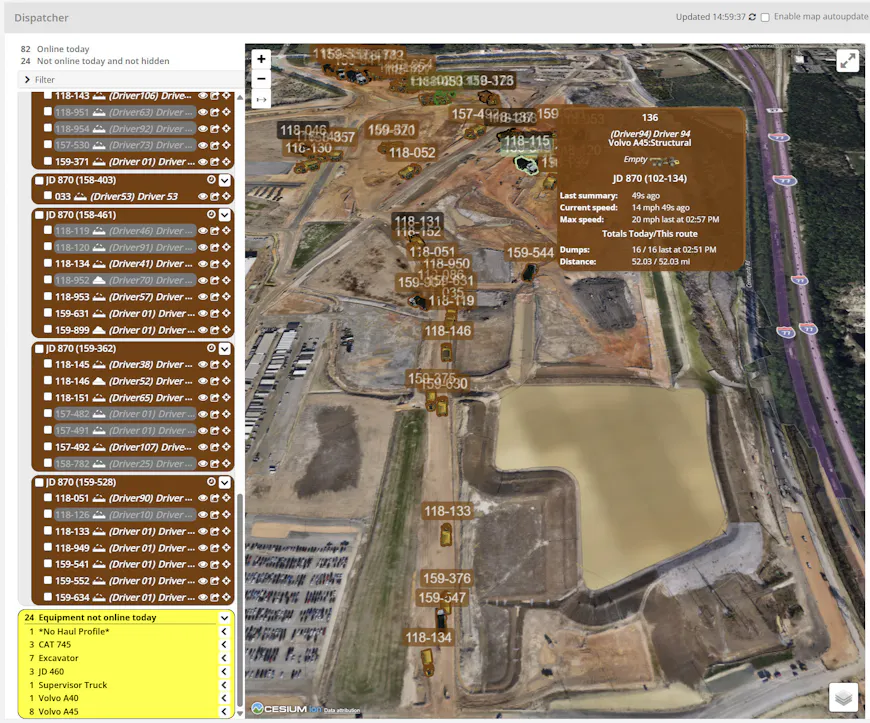
Combining a high level overview of all operations on site, together with detailed analytics about each vehicle, gives greater insights into operations. Courtesy Rockpile Solutions.
In the app, all trucks are color coded to indicate their current status, e.g., full, empty, under maintenance. Managers can apply sophisticated metadata filtering for insights on the group as a whole, review historical tracks to analyze safety incidents, and drill down to get detailed information about each vehicle. Each make and model of truck is animated with incredible detail, with even the tires or treads rotating to match the vehicle’s tracked speed.
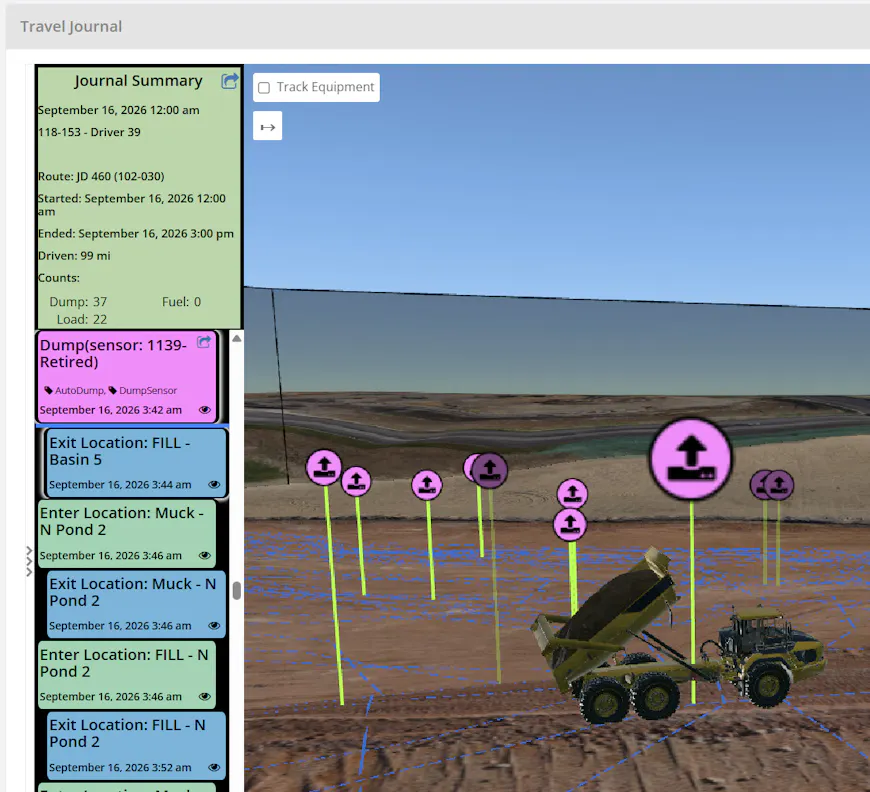
By maintaining a full history of each truck’s path and activities, Rockpile gives managers access to retrospectives when incidents occur. Courtesy Rockpile Solutions.
With Cesium, Rockpile Solutions is helping customers move millions of yards of dirt with greater efficiency and intelligence. To try CesiumJS for yourself, check out our getting started tutorial.