Hopeworks Builds Camden Digital Twin with Cesium for Unreal
Developers at Hopeworks have built a digital twin of the city of Camden, New Jersey. Their digital twin, which uses Cesium for Unreal, is used by the Rowan University / Rutgers - Camden Board of Governors and the city of Camden for city planning as part of ongoing revitalization efforts. Hopeworks is helping them to visualize those plans.
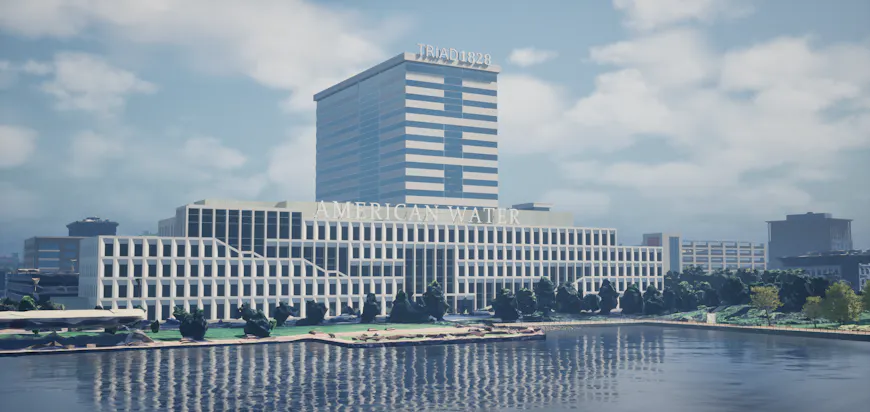
Hopeworks visualizes planned development in Camden, New Jersey, using Cesium for Unreal. Courtesy Hopeworks.
To get stakeholder input, architects provide models and designs of the planned buildings, which the developers at Hopeworks turn into 3D models using Blender. They place these Blender models in geospatial context using Cesium for Unreal, with Google Photorealistic 3D Tiles providing a visualization of the surrounding area. Stakeholders can then review designs, analyze community impact, request iterations, and solidify the plan.
This process is all the more remarkable because it isn’t just a commercial product: it’s also a training opportunity. Hopeworks is a nonprofit organization in New Jersey and Pennsylvania dedicated to helping young adults gain tech skills in a supportive environment that will launch them into in-demand tech careers.
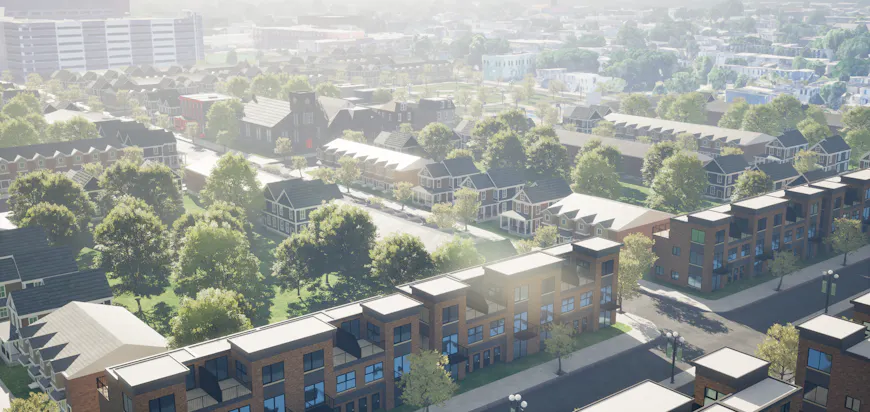
Hopeworks uses Blender to create 3D models of planned buildings. Google Photorealistic 3D Tiles provide the surrounding geospatial context. Courtesy Hopeworks.
The only requirement to become a trainee at Hopeworks is to be between the ages of 17 and 26. All participants are given the opportunity to receive training, develop skills, and join paid internships where they practice skills for high demand fields and prepare for placement in tech jobs.
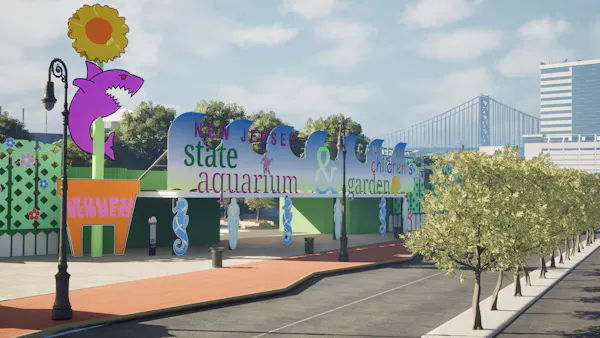
Visualizations of planned projects help city stakeholders assess plans for revitalization. Courtesy Hopeworks.
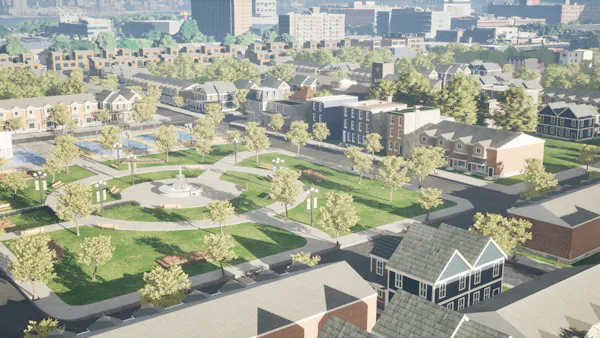
Visualizations of planned projects help city stakeholders assess plans for revitalization. Courtesy Hopeworks.
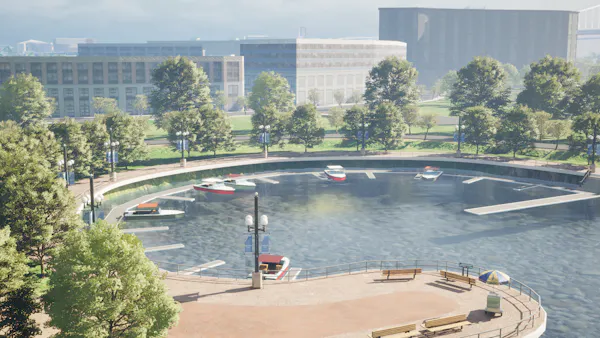
Visualizations of planned projects help city stakeholders assess plans for revitalization. Courtesy Hopeworks.
Hopeworks’ digital twin project maintains anywhere from 12 to 16 interns, as well as full-time staff, who have all come through the program themselves. Students come in with no experience in 3D modeling or geospatial development. After first shadowing staff and then participating in the project themselves, they ultimately leave the program with a mature skillset ready for the workforce.
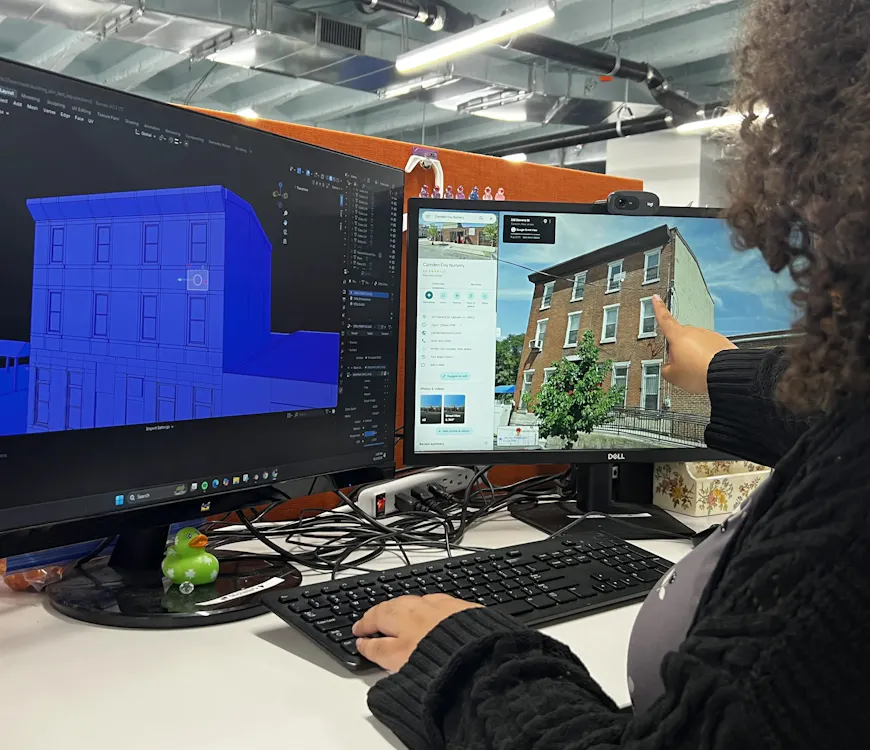
Hopeworks interns gain experience through hands on training. Courtesy Hopeworks.
“Working with Cesium for Unreal allowed us to create a viable product that served a serious need in the community. At the same time, it was accessible enough that it could be built by interns with no prior experience. Watching the team own it and watching it grow has brought a real sense of fulfillment.”
- John Kissling, Chief Business Officer, Hopeworks
Hopeworks’ digital twin of Camden demonstrates what is possible when emerging developers get the opportunity to work on real-world applications. To begin training for your own digital twin project, try placing objects on a 3D globe in Unreal Engine. And if helping launch young people into brighter futures interests you, Hopeworks is always seeking volunteers, donations, and business opportunities: see how you can get involved.