Cesium Announces Summer 2026
Ecosystem Grant Recipients
I'm delighted to announce the summer 2026 cohort of Cesium Ecosystem Grant recipients.
This group represents the breadth of innovation happening across the 3D geospatial ecosystem, from open-source geospatial software and workforce development to cultural heritage preservation. These recipients impressed the Committee with projects that expand interoperability, increase access to Cesium technologies, and demonstrate new ways geospatial technology can create impact in research, education, and public engagement.
OGC 3D Tiles 1.1 Support for GRASS
Dr. Corey White, North Carolina State University
GRASS GIS is one of the longest-standing and most widely used open-source geospatial analysis platforms in academia, government, and research institutions worldwide. Through this grant, Dr. Corey White and collaborators will bring support for OGC 3D Tiles 1.1 to the GRASS GIS ecosystem, enabling users to export geospatial analysis results directly into Cesium and other 3D Tiles-enabled platforms.
The project will focus on developing core export capabilities, documentation, tutorials, and community engagement activities to accelerate adoption across the open-source geospatial community. By improving interoperability between GRASS GIS and modern 3D geospatial visualization platforms, this work helps lower barriers for researchers and practitioners seeking to share and explore large-scale geospatial datasets in immersive 3D environments.
Corey White is a Geospatial Research Software Engineer at the Center for Geospatial Analytics at North Carolina State University, a core GRASS GIS maintainer, and a graduate of the Center’s Ph.D. program in Geospatial Analytics. The project team also includes Anna Petrasova and Vaclav Petras, and its work will be integrated directly into the core GRASS repository.
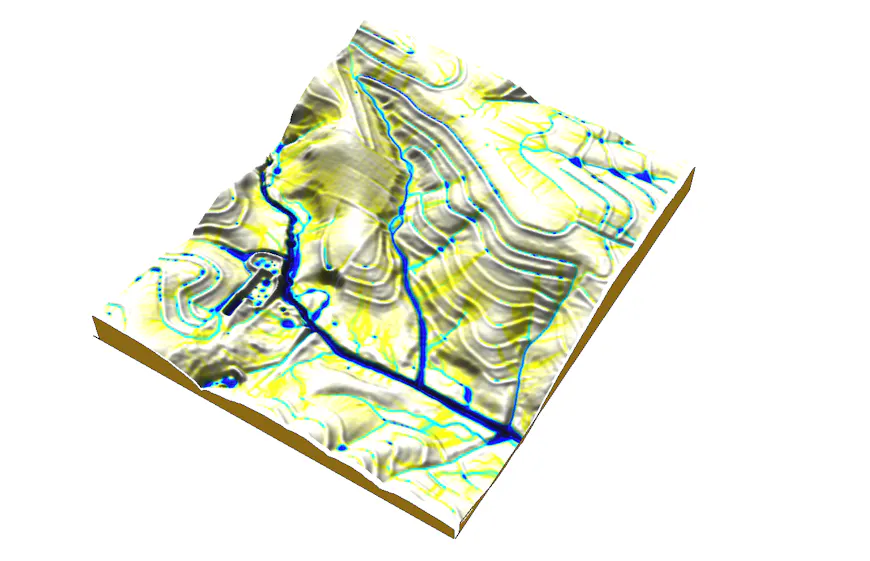
Flow velocity over an agricultural field simulated with r.sim.water, GRASS's implementation of the SIMWE model (SIMulated Water Erosion), draped on lidar-derived terrain. Courtesy Corey White.
Cesium-Powered Aerospace Engineering Education and Workforce Development
Dr. Bradley Denby, Virginia Tech
As geospatial and aerospace industries continue to converge, there is growing demand for engineers who understand both spatial computing and space mission analysis. Dr. Bradley Denby's project will create CesiumJS-based aerospace engineering coursework and certification pathways that introduce undergraduate and graduate students to satellite design, mission planning, and space systems analysis using Cesium technologies.
The resulting educational materials will provide hands-on learning opportunities while helping prepare the next generation of engineers and researchers to work with open 3D geospatial technologies. The committee was particularly excited by the project's potential to combine workforce development, academic impact, and long-term ecosystem growth.
Bradley Denby is an Assistant Professor in Virginia Tech’s Department of Aerospace and Ocean Engineering. He earned a bachelor’s degree in physics from Southern Illinois University, a master’s degree in computer engineering from the Air Force Institute of Technology, and a Ph.D. in electrical and computer engineering from Carnegie Mellon University.
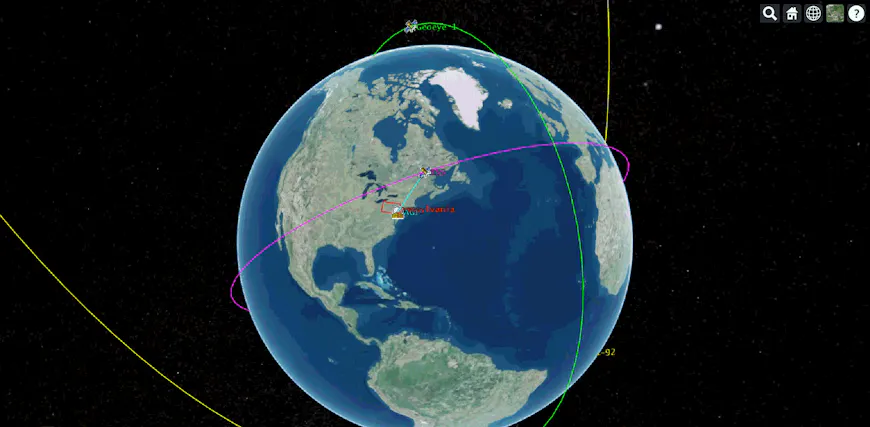
Satellites rendered in CesiumJS. Courtesy Bradley Denby.
Building a Digital Cultural Heritage Experience for Gberefu Island
Shellie Baxter, Our Genetic Legacy / We The People Museum
Shellie Baxter's project demonstrates the power of geospatial technology to preserve, communicate, and celebrate cultural heritage. This grant will support the creation of the Cesium-based technical foundation for an immersive digital museum experience focused on Gberefu Island, an important historical site connected to the transatlantic slave trade.
The project will leverage Cesium for Unreal, CesiumJS, and 3D Tiles workflows to create engaging public experiences that make history more accessible through interactive storytelling and exploration. The committee viewed this as a compelling "Cesium for Good" initiative that combines technological innovation with meaningful public engagement and cultural preservation.
Shellie Baxter leads Our Genetic Legacy and the We The People Museum project. She holds a BA from University of California, Berkeley in Multi/ Interdiscilplinary Studies. For this focused nine-month phase, the team includes CCD-certified developer Elena Dimopoulou, whom Baxter identified through the Cesium Certified Developer directory. Their collaboration is an exciting example of how the Cesium ecosystem can connect project leaders with trusted technical expertise and create partnerships that extend the impact of grant funding.
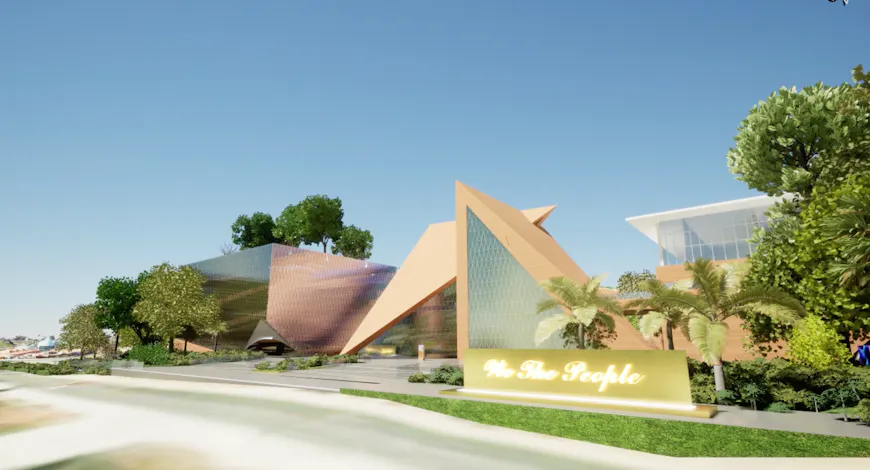
Rendering for We The People Museum. Courtesy Shellie Baxter.
Looking Ahead
We look forward to following the progress of these projects and sharing updates with the community in the coming months.
The Cesium Ecosystem Grants program supports initiatives that strengthen the open 3D geospatial ecosystem through interoperability, education, community development, and innovation. If you have an idea that helps advance the ecosystem, we encourage you to apply during an upcoming grant cycle.
Congratulations to Corey, Bradley, and Shellie. We are excited to welcome them to the growing community of Cesium Ecosystem Grant recipients and look forward to seeing the impact of their work.