WorldLens Delivers High-Performance VR Exploration with Cesium for Unity
Stoian (Boe) Andrei’s greatest passion is VR. He loves the way a headset can transport you from your room to another place. So when, at 15 years old, he saw the announcement that Google Earth data would be available in Unity via Cesium for Unity, he began developing a VR app to transport viewers anywhere on the planet.
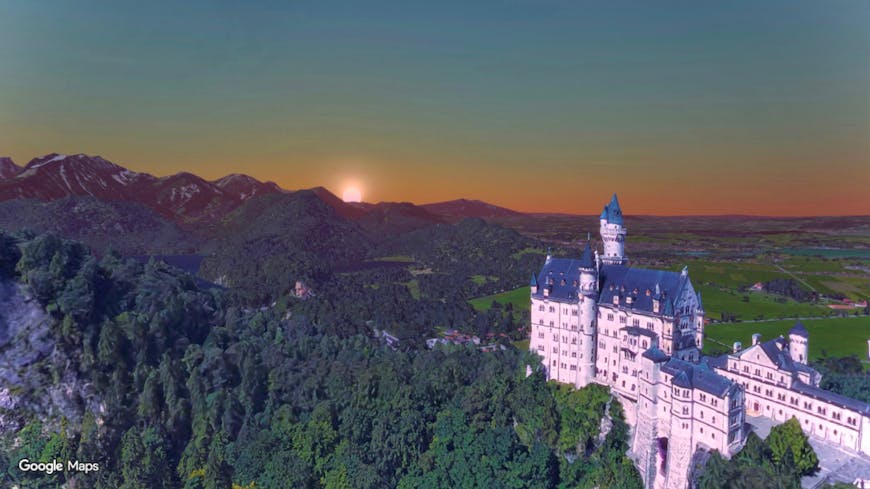
Neuschwanstein Castle, Germany. WorldLens allows users to explore anywhere on the planet with Google Photorealistic 3D Tiles streamed in Cesium for Unity. Courtesy WorldLens.
WorldLens uses Cesium for Unity to stream massive geospatial datasets to lightweight hardware. Boe selected Cesium for Unity because the geospatial platform provides exclusive capabilities and customization flexibility required for the app’s performance and fidelity.
Stepping into WorldLens on Meta Quest 3 is like stepping off a satellite. Users gaze around at the stars as they float down to Earth, the world at their fingertips. And the whole world really is there to explore.
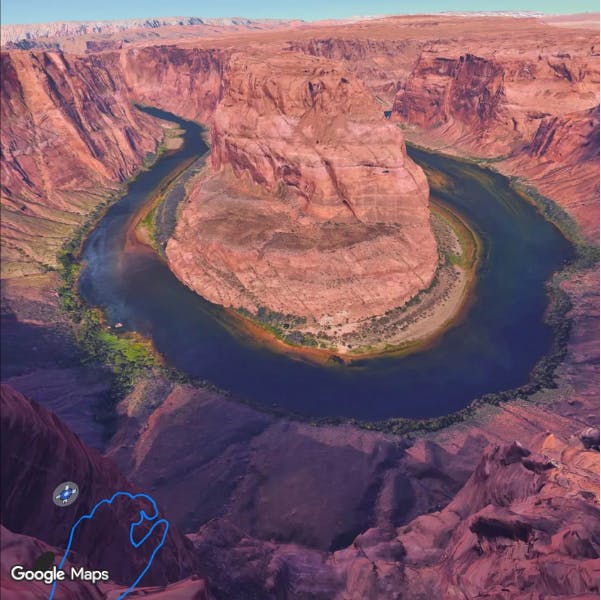
Horseshoe Bend, Arizona. With World AI, users also get personalized insights as they explore. Courtesy WorldLens.
Users plan upcoming trips, time travel through historical imagery, revisit their childhood homes, or watch the sun rise over distant mountain ranges. With features like multiplayer and street view, WorldLens helps users connect outside their own headset.
The app is more than just a viewer: Boe has integrated the Open AI API to offer AI insights wherever users may go, in any of 2,000 languages. Users can ask for a tour of Bucharest, get insights into Victoria Falls, or request help finding a better route home.
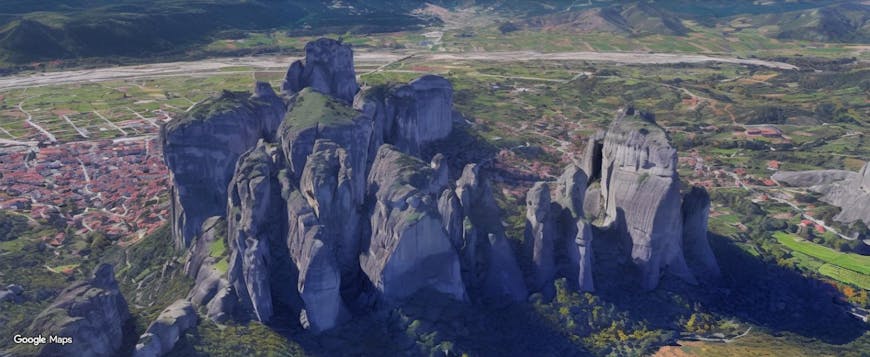
Meteora, Kalabaka, Greece. WorldLens allows explorers to examine both the natural and built environment in locations both familiar and exotic. Courtesy WorldLens.
Boe has focused his development on performance tweaks that bring high performance 3D Tiles over even limited connections to viewers around the world. Boe leaned on the Cesium community forum and his own C# expertise to push optimization to the limit, offering efficient streaming and dynamic settings that adapt to users’ connection quality and device capabilities. Even users far from Google’s servers can enjoy smooth terrain rendering and fast loading.
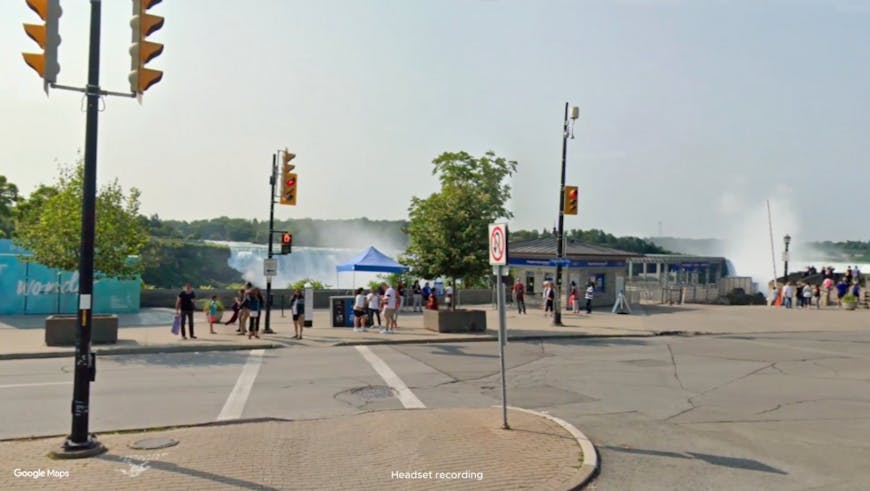
Niagara Falls, Ontario, Canada. With Cesium for Unity providing access to global datasets, users can travel to any spot on Earth and then enter Google Street View to explore the area. Courtesy WorldLens.
Cesium for Unity unlocked streaming massive datasets in hardware as light as the Quest, making experiences like WorldLens possible. To bring real world data into your app, try Cesium for Unity.