
Help Us Shape Composable Tiling Pipelines for Next-Gen Workflows
Written by  Jake Adelgren,
3D Tiles has become the foundational OGC community standard for the 3D geospatial ecosystem. Massive, heterogeneous 3D geospatial datasets such as 3D photogrammetry and reality models, 3D buildings, point clouds, and Gaussian splats can be encoded as 3D Tiles, optimized for streaming, and rendered with high precision and performance. To power these experiences, Cesium has built robust tiling pipelines to process various types of source data into highly optimized tilesets. Because 3D Tiles is built for interoperability, these tilesets can be seamlessly streamed and visualized across a wide-open ecosystem of runtime engines, including CesiumJS, Cesium for Unreal, Three.js, BabylonJS, QGIS, and Godot.
In Technical, 3D Tiles, Performance
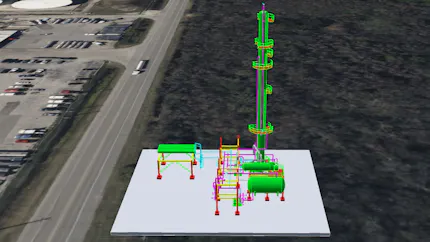
Introducing CAD-Style Workflow Extensions for glTF and 3D Tiles 2.0
Written by Mark Schlosser, Erin Ingram, and Daniel Zhong,
In 3D Tiles, AEC, Technical, CesiumJS
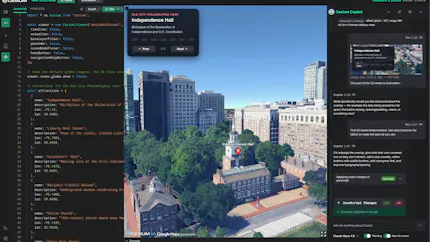
Introducing CesiumJS Sandcastle Copilot
Written by Justin Dehorty,
In CesiumJS, Technical
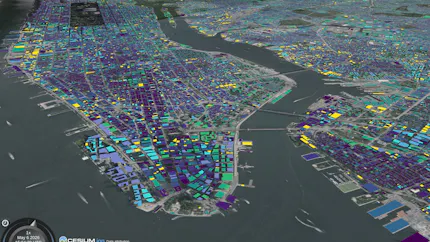
Help Shape Vector Data Support in 3D Tiles
Written by Xuan Huang,
In 3D Tiles, Technical, News, Open Standards
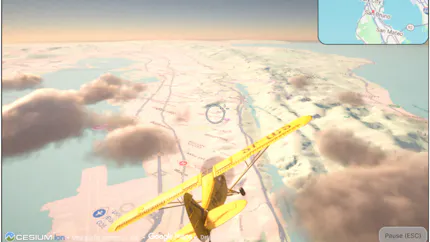
Introducing Cesium for Unity Web
Written by Brendan Duncan,
In Technical

Draping Imagery over 3D Tiles in CesiumJS
Written by Gabby Getz & Marco Hutter,
In 3D Tiles, CesiumJS, Technical
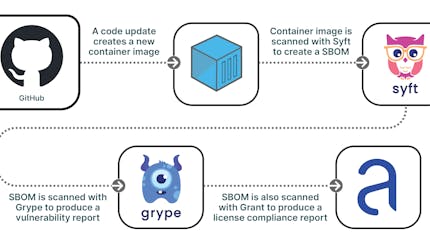
Cesium ion Uses Iron Bank Container Images for Software Security
Written by Mike Frederick,
In Cesium ion Self-Hosted, Cesium ion, Technical, Open Source, Federal & Defense